Sleep Disorders Center

Specialized Care Just for You

The Sleep Disorders Center at Lakeland Regional Health offers comprehensive diagnostic testing and individualized treatment plans designed to support healthier, more restorative sleep. Our specialists partner closely with you to understand your symptoms and guide you toward lasting improvement.

goldseal_national

What does the gold seal mean and why is it important to you?

  1. The Joint Commission Gold Seal of Approval is an internationally recognized symbol of quality.
  2. You can trust we have met the highest standard of quality protocols and patient safety established and required to be a Federally/Medicare qualified sleep center.
  3. You can rest assured we are in compliance with state and national licensing requirements.
  4. Our facility undergoes an on-site survey by a Joint Commission survey team at least every three years.
  5. Our Sleep Center and other Joint Commission Gold Seal facilities stand ready for unannounced inspections 365 days each year.

Our Services

Diagnostic sleep studies are used for the sleep tech on duty to observe what is happening during your sleep, documenting anything that would show you have sleep apnea. The diagnostic sleep study measures your nighttime sleep patterns. After you are connected to various leads and sensors, which allow the sleep tech to record and monitor your sleep, the sleep tech will observe you remotely throughout the night. Leads are placed on your scalp and face. A sensor on your finger monitors the oxygen level in your blood. Belts around your chest and belly measure your breathing. Small pads on your chest record your heart waves. After lights-out, you will not be disturbed for the remainder of the night.

If your diagnostic sleep study indicates a breathing disorder may be affecting your sleep, your physician may order a second night for a treatment sleep study. This study monitors your sleep pattern. Leads, sensors, and belts, similar to the ones you wore for your diagnostic sleep study, are used for this study.

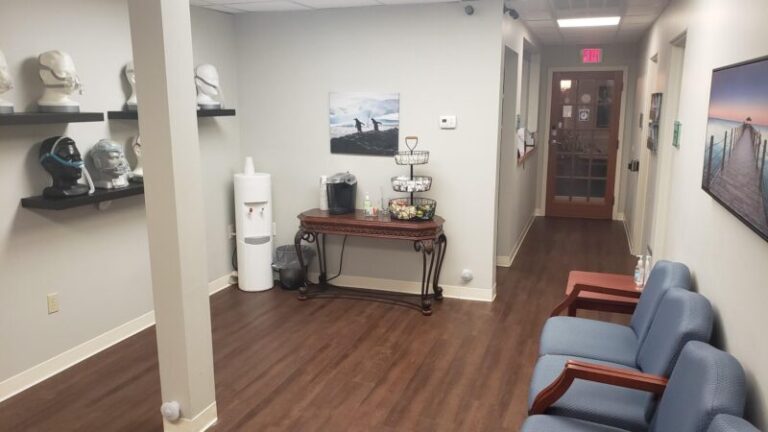
Prior to lights out, the tech will explain a Continuous Positive Airway Pressure (CPAP) machine. The CPAP machine creates an air “splint” holding your airway open. You will also be shown several types of CPAP masks. You can choose the one you think will be most comfortable. The pressure holding the airway open varies for each patient. Once your appropriate pressure is determined, the information is given to your physician. Your physician will order the pressure setting for your home machine.

This study combines a diagnostic sleep study and a treatment sleep study all in one night. You will be connected to similar leads, sensors, and belts as described under Diagnostic Sleep Study. The first half of the night, the tech monitors your sleep. The tech will interrupt your sleep around 1:30 a.m. to fit the CPAP mask to your face. The tech spends the remainder of the night remotely adjusting the pressure, which is designed to reduce or eliminate your breathing disorder.

An MSLT is a daytime study, which follows your overnight diagnostic sleep study, to test for narcolepsy. In the morning, some of the leads and belts are removed. During the MSLT, you will have a series of five 20-minute napping periods throughout the day. During breaks between napping, we will ask that you stay awake. Your physician is interested in three things: if you go to sleep at every napping opportunity, how quickly you go to sleep, and if you go into deep, restorative, rapid-eye-movement (REM) sleep.

The home sleep study is an unattended diagnostic sleep study done in comfort of your home. The home study consists of a belt that monitors your breathing, with a small box that attaches to a nasal cannula and a sensor on your finger to monitor the oxygen level in your blood. It monitors your breathing for sleep apnea. It records respiratory effort, airflow, heartrate and SpO2. This is a diagnostic test ONLY for sleep apnea. You will wear the home study device for six hours. Simply pick up in our office and drop off the following day.

Sleep Disorders

Understanding what may be affecting your sleep is the first step toward finding meaningful relief. Our expert team evaluates and treats several types of sleep disorders, such as the ones listed below.

Obstructive Sleep Apnea (OSA) is a condition where the airway becomes obstructed during sleep and airflow into the lungs is diminished or stops completely. Usual causes of obstruction are enlarged tonsils and/or adenoids, loss of muscle tone in the neck during certain stages of sleep, or excess fatty tissue in the neck area.

During the obstruction, it is not unusual for the oxygen level in the blood to decrease. The pattern of obstruction, awakening with a loud snort to re-open the airway and then the obstruction happening again, repeats itself many times during the night. This constant sleep/wake cycle leaves you feeling exhausted the next day even though you allowed sufficient time for a good night’s sleep.

Although many people experience occasional trouble sleeping, if the problem is severe or persistent, your poor sleep may require medical attention. Your poor sleep may contribute to a number of serious and chronic health issues. Your poor sleep quality contributes to weight gain, diabetes, worsening hypertension, and congestive heart failure.

Transient insomnia is not unusual and may present itself after a traumatic event in your life. However, there is a longer, more disruptive type of insomnia. Having trouble falling asleep and staying asleep is a malady which plagues many of us and leaves you too tired to function properly the next day. If you have trouble falling asleep and staying asleep three nights a week for a month or more, it may be time to talk with your physician about chronic insomnia.

The feeling of ‘creepy-crawlies’ or tingling sensations on your extremities (usually the legs) during the night is the most commonly reported symptom of PLMS. This sensation can be enough to prevent the onset of sleep or even wake you from a sound sleep. It can also cause you to kick your legs or jerk your arms. This disruption of sleep leaves you tired and not able to concentrate on your day-to-day activities.

Although getting a full and restful night of sleep, you find it almost impossible to stay awake at a traffic light or even having a conversation with a friend. Narcolepsy is a disorder within the brain which prevents you from staying awake. Excessive daytime sleepiness is one of the hallmarks of this disease. A sleep study can diagnose this disease and treatment is available.

For Patients

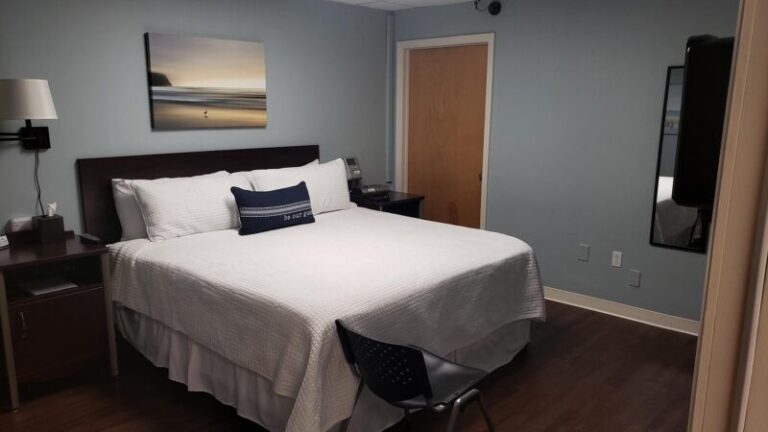
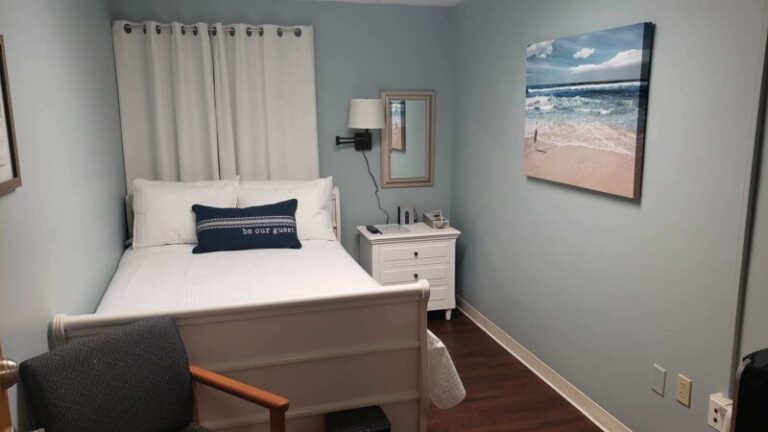
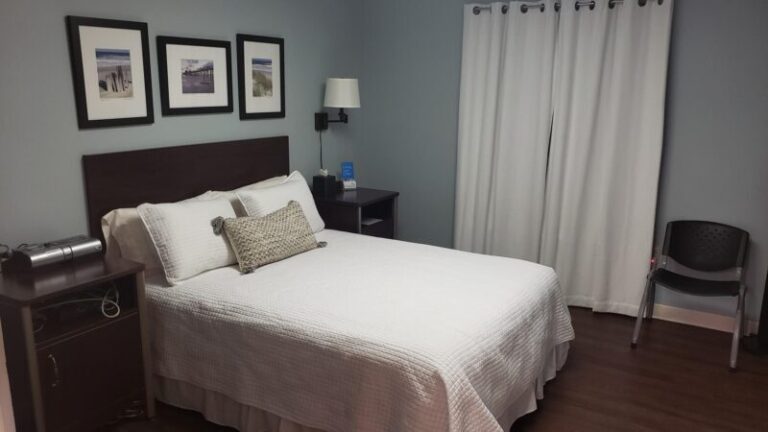
You should arrive at the Sleep Center at 8:45 p.m. Most nights there will be two patients. The sleep tech will escort you to your private room. You will have the opportunity to fill out any needed forms and change into comfortable sleeping attire.

A tech spends about 45 minutes with you taking the necessary measurements for lead placement. Once the tech is finished with your hook-up, you may read, relax, or watch TV.

Lights out must be no later than 11:00 p.m. This allows for 6-plus hours of recording time for accurate scoring and reading of the study. Please let the sleep tech know if you prefer to have lights out earlier than 11:00 p.m. You will be awakened between 5:00 a.m. and 6:00 a.m. to return home prior to your workday.

You should bring and take all usual medications, unless specifically instructed by your physician to do otherwise.

Please do not take a nap on the day of your sleep study. Avoid caffeine and alcohol after 2:00 p.m.

If you have further questions, check our Frequently Asked Questions, or email us at InfoSleep@mylrh.org.

Patient Questionnaire

Click here to complete your Patient Questionnaire. This form must be completed prior to your sleep study appointment.

Frequently Asked Questions

You need to have a physician’s order for a sleep study, much like a prescription for medication. A referral may be needed if your insurance is an HMO type policy. Please check with the Customer Service phone number on your insurance card.

In most cases, yes, although you may be responsible for a co-pay. Questions about coverage of your particular policy should be directed to the Customer Service number on the back of your insurance card.

Please bring your completed patient questionaire, any normal bedtime medications, and comfortable sleeping attire.

Unless instructed differently by your physician, please take all normal medications, in the normal dosage, at the normal times as you do every day.

No, unless prescribed by your provider. The Sleep Center will supply additional pillows and blankets if required.

Comfortable sleeping attire is recommended. T-shirts and gym shorts are what most patients wear for the study.

Neither pets nor spouses are allowed at the Sleep Center. We need to get an accurate picture of YOUR uninterrupted sleep. If you need additional assistance due to medical reasons, a guardian may stay to assist the sleep tech throughout the sleep study. If you have a service animal, you may bring them. Please advise scheduler while setting up your appointment.

You will need to arrive at the Sleep Center at 8:45 p.m. You will leave no later than 6:00 a.m. the following morning.

There are no needles involved. A sleep study is non-invasive.

You will have several leads attached to you. This is the most valuable way we “watch” you sleep. There is also an infrared camera in the patient room so we may monitor your position, movements, and need for assistance.

The study itself does not hurt. Occasionally, a patient will have some slight irritation the following day in sites where leads were placed.

The technicians at the Sleep Center are not licensed to dispense medications. If your ordering physician has prescribed a specific medication for your sleep study, please fill the prescription prior to arriving at the Sleep Center and you will self-administer your medication prior to the study.

Many patients believe they will not be able to fall asleep. If you feel you fall into this category, please discuss it with your ordering physician. He may prescribe a mild sleep aid, which will not affect your study, but will help you fall asleep.


If you normally have a snack before bedtime, please bring it with you. Remember to avoid caffeinated products. Coffee, water, and a light snack are provided in the morning before your departure.


Patient rooms are equipped with televisions and cable. TVs must be turned off by 11:30 p.m.


There are no patient showers in the Sleep Center. However, you may want to go home and shower before going to work after your sleep test.


A sleep tech will be in the Sleep Center all night, monitoring patients for the entire night.


Reading physicians receive a “scored” copy of your sleep report within 72 hours. They interpret the results and will forward the completed report to the ordering provider. Please contact your ordering physician’s office for a follow up appointment to review your results with your physician.


No. The physician who ordered your sleep study will order your CPAP machine. The machine is delivered by Durable Medical Equipment Company, which is not associated with LRH Sleep Disorders Center.


Yes. Insurance covers the cost of your CPAP machine and routine replacement of masks, tubing, and filters. Your co-pay will vary depending on your insurance policy.


Insurance Process

Your physician has ordered a sleep study for you. Sleep studies require an order from your physician. A referral through your insurance company may or may not be necessary. Your ordering physician or primary care physician will obtain the necessary referral or authorization. Please confirm this information with the Referral Specialist at your physician’s office.

If you would like to know your specific co-pay, please look on the back of your insurance card. Call the Customer Service number listed there. Your insurance company will want to know the study your physician has ordered and the diagnostic code your physician has determined. You need to get this information from your doctor before calling your insurance company.

Our Location

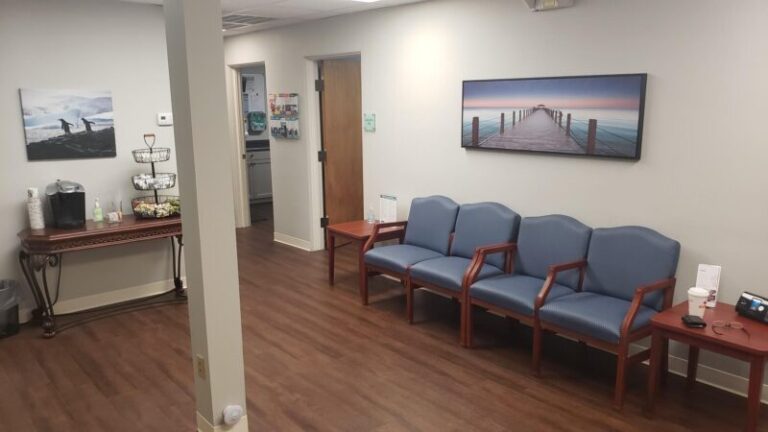
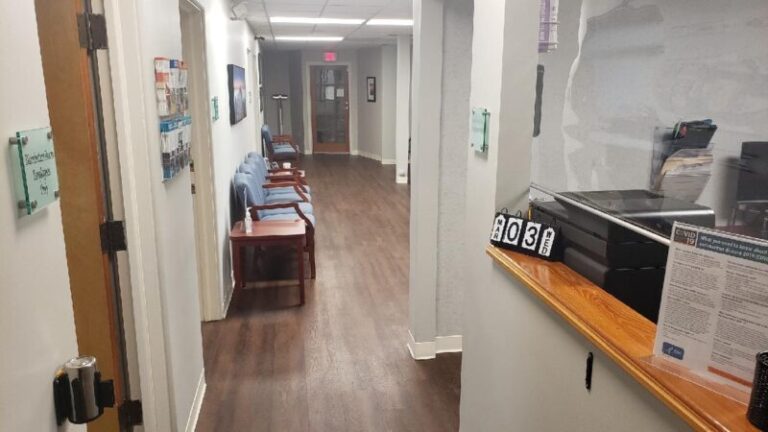
Our sleep center offers a comfortable, quiet environment designed to help you rest naturally, with private rooms and a welcoming space to support your care.